

Encoding. Encrypting. Transporting over HTTP.
Receiving. Decrypting. Decoding. Rendering to surface. Syncing audio.
At scale.
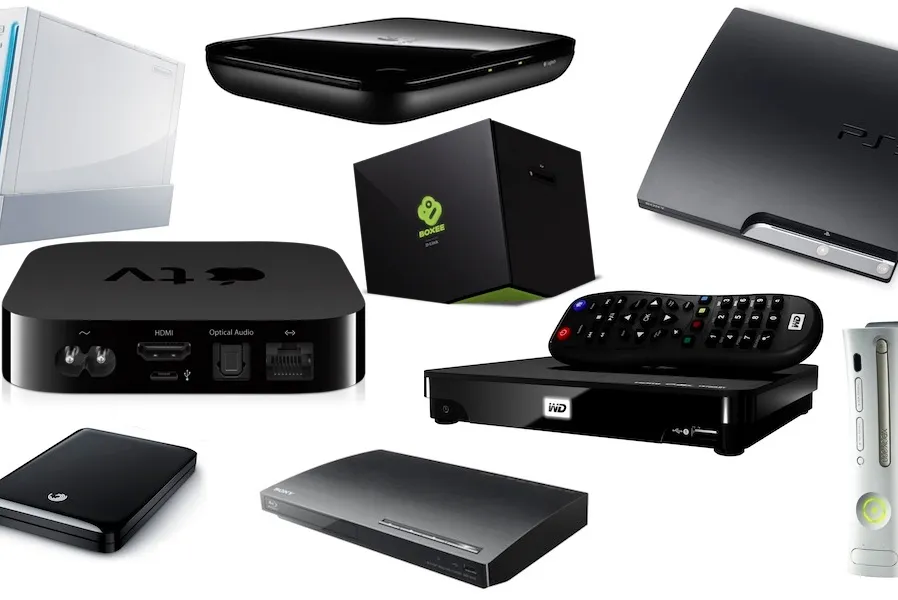
I’ve had the privilege of shipping software that has run on 100M+ devices globally, from set-top boxes, IoT hubs / sensors, automotive ECUs, 5G network CPEs to deeply embedded Linux systems. A good portion of that work was in the media domain, where performance, security, latency, and interoperability all collide.
It’s easy to underestimate it thinking it’s just “video playback”
It’s not just “video playback.”
It’s a distributed, hardware-accelerated, cryptographically enforced real-time system.
Linux vs Android Media Frameworks – The Real Differences
Most large-scale consumer devices are either embedded Linux or Android based. But the media stack architecture differs significantly.
🔹 Embedded Linux Media Stack
Typical stack on Linux STBs or custom SoCs:
Application
→ GStreamer / custom pipeline
→ Vendor multimedia framework
→ V4L2 / ALSA
→ Hardware codecs (VPU)
→ DRM/KMS
→ Framebuffer / Wayland
Key characteristics:
• GStreamer pipelines with hardware-accelerated plugins
• Direct control over buffer management
• Zero-copy DMA where possible
• Custom demuxers and hardware parsers
• Tightly coupled with SoC vendor SDK
• Real-time optimizations at kernel level
You control everything — including what can break.
On many STB-class devices, we implemented:
- Secure demux
- Hardware AES decryption blocks
- Zero-copy video pipeline into KMS
- Audio-video sync correction at PTS level
- Custom watchdogs for pipeline recovery
You’re often debugging memory fragmentation, CMA failures, and VPU starvation at 3 AM.
🔹 Android Media Stack
On Android, the abstraction is stronger:
Application
→ ExoPlayer / MediaCodec API
→ Stagefright
→ Binder IPC
→ HAL
→ Hardware codecs
→ SurfaceFlinger
→ Hardware Composer
Android adds:
• Binder-based media services
• Surface abstraction
• Hardware Composer (HWC)
• Widevine DRM integration
• CTS compliance requirements
Unlike Linux, you don’t own the entire pipeline. You operate inside:
- MediaCodec buffers
- Surface lifecycle
- AudioTrack sync
- SELinux constraints
The complexity shifts from kernel-level control to framework orchestration, lifecycle management, and device certification.
And certification is not trivial, especially when DRM and compliance enter the picture.
DRM, ARM TrustZone & Media Security
When you’re shipping to millions of devices, content protection is not optional.
We worked extensively with:
• Hardware Root of Trust
• Secure Boot chains
• ARM TrustZone
• TEE-based key management
• Secure video path
• Widevine L1-class integrations
On ARM SoCs, ARM TrustZone creates two worlds:
- Normal World (Linux/Android)
- Secure World (TEE)
Sensitive operations move to Secure World:
• DRM key handling
• AES decryption
• HDCP key storage
• Anti-rollback enforcement
• Secure monotonic counters
Video frames for premium content often travel through a secure video path, bypassing normal memory, preventing screen capture or framebuffer access.
If your secure boot chain breaks, your DRM level drops.
If your TEE implementation is weak, keys leak.
If rollback protection is misconfigured, you expose downgrade attacks.
Shipping 100M+ devices forces you to think adversarially.
Secure Boot & Full Disk Encryption in IoT
The same architecture principles apply beyond media.
In multiple IoT and embedded programs, we implemented:
• Hardware-backed secure boot
• Signed bootloader → signed kernel → signed rootfs
• Anti-rollback fuses
• TEE-based key derivation
• Full disk encryption (dm-crypt)
• Device identity tied to hardware root
In ARM-based systems, leveraging TrustZone for:
- Secure key storage
- TLS private key isolation
- Secure provisioning
- OTA package verification
You quickly realize:
Media DRM and IoT device security are architectural cousins.
Both require:
- Hardware root of trust
- Immutable boot chain
- Secure key handling
- Remote attestation capability
The threat models differ.
The primitives are the same.
What Shipping at 100M+ Teaches You
- Performance tuning cannot violate security boundaries
- Security mechanisms cannot destroy boot time or UX
- Every abstraction leaks under load
- Certification timelines are as hard as engineering
- Debugging in field at scale is an art
You learn to:
- Trace PTS drift across pipelines
- Debug CMA exhaustion
- Investigate TrustZone crashes without logs
- Handle OTA failures without bricking devices
- Design fallback media paths
- Model attack surfaces
The real engineering is not in making it work once.
It’s making it work across:
• Different SoCs
• Different GPU/VPU blocks
• Different Android framework versions
• Different kernel forks
• Different memory constraints
• Different regulatory environments
And making it secure by default.
Shipping media at scale isn’t about playback.
It’s about building a cryptographically secure, hardware-accelerated distributed system that happens to render pixels and produce sound.
That’s where embedded engineering becomes both brutal and beautiful.
If you’ve worked in media, STBs, Android frameworks, or embedded security, you know exactly what I mean.
We at Yantra ( BuildYantra.AI ) have decades of experience on Media from production, encoding, encryption, DRM protect, transport, DRM license acquisition, decrypt, decode and render. For both media and IoT devices we have implemented secure boot, full disk encryption using ARM TrustZone, TEE and hardware crypto engines.
Lets connect -> https://calendly.com/mrukant-buildyantra