

Introduction
For decades, automation has promised efficiency, scale, and precision. Robot economics shows that in many real-world scenarios, humans still outperform robots in flexibility, decision-making, and cost effectiveness, especially in early stages.
Although, according to industry reports from the International Federation of Robotics (IFR), automation adoption continues to accelerate globally.
McKinsey Global Institute highlights that automation ROI improves significantly with scale.
So the real question is not:
👉 “Are robots better than humans?”
The real question is:
👉 “At what point do robots become economically superior?”
This blog breaks that down with clear frameworks, objective metrics, and mathematical models that engineering leaders and business executives can actually use.
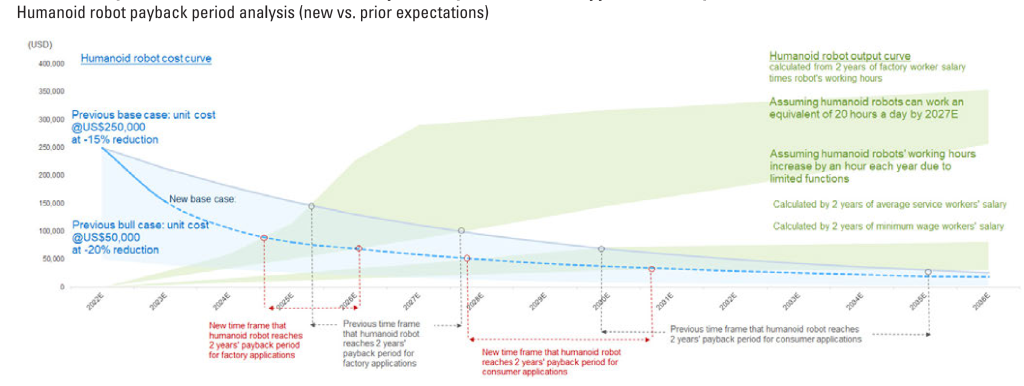
The Core Economic Principle
At its heart, the decision comes down to:
👉 Total Cost of Ownership (TCO) vs Total Value Delivered (TVD)
A company should shift to robots when:
Robot TCO per unit output < Human TCO per unit output
Let’s break this down.
1. Total Cost of Ownership (TCO)
For Humans
Human cost is not just salary.
It includes:
• Base salary (S)
• Benefits and insurance (B)
• Training and onboarding cost (T)
• Attrition and rehiring cost (A)
• Productivity variability cost (V)
👉 Human TCO Formula:
TCO_human = S + B + T + A + V
For Robots
Robot cost includes both capital and operational components:
• Initial capital expenditure (CapEx)
• Integration cost (I)
• Maintenance cost (M)
• Energy consumption (E)
• Software and updates (SW)
• Depreciation (D)
👉 Robot TCO Formula:
TCO_robot = (CapEx / Useful Life) + I + M + E + SW + D
2. Cost Per Unit Output
Raw cost is meaningless without productivity.
👉 The real comparison is:
Cost per unit = TCO / Units produced
Human Productivity
• Units per hour vary
• Fatigue impacts output
• Error rates increase over time
👉 Effective Human Output:
Output_human = Base_rate × Efficiency_factor
Robot Productivity
• Consistent throughput
• Near zero fatigue
• Predictable cycle time
👉 Robot Output:
Output_robot = Cycle_time⁻¹ × Uptime
3. Break-Even Analysis
This is where decisions become objective.
👉 Break-even point occurs when:
(TCO_robot / Output_robot) = (TCO_human / Output_human)
Practical Insight
Robots usually lose early because:
• High upfront CapEx
• Integration complexity
• Lower flexibility
But over time:
• Human costs scale linearly
• Robot costs amortize
👉 Key tipping point: volume
4. Volume Threshold
Robots win when production volume crosses a threshold.
👉 Break-even volume formula:
V_break-even = Fixed_robot_cost / (Human_cost_per_unit − Robot_cost_per_unit)
Interpretation
• Low volume → humans are cheaper
• High volume → robots dominate
👉 This is why:
• Startups use humans
• Enterprises use automation
5. Task Complexity vs Variability
Not all tasks are equal.
Humans dominate when:
• High variability
• Unstructured environments
• Frequent exceptions
• Cognitive decision-making required
Robots dominate when:
• Repetitive tasks
• Structured workflows
• Low variability
• High precision requirements
👉 Decision metric:
Automation Suitability Score (ASS)
You can define:
• Variability (V)
• Repeatability (R)
• Precision requirement (P)
👉 ASS = (R + P) − V
Higher ASS → better candidate for robotics
6. Error Cost and Quality Impact
Errors have real economic impact.
Human Errors
• Fatigue driven
• Training dependent
• Inconsistent
Robot Errors
• Systematic
• Predictable
• Fixable at root
👉 Cost of Errors:
Error_cost = Error_rate × Cost_per_error
Key Insight
If cost of error is high, robots become attractive earlier.
Examples:
• Semiconductor manufacturing
• Medical devices
• Automotive assembly
7. Scalability Factor
Humans scale linearly.
👉 Double output → double workforce
Robots scale differently:
• Add machines
• Optimize software
• Improve utilization
For deeper understanding of parallel compute scaling, see: [Deep Dive into GPU Compute Hierarchy]
👉 Scalability efficiency metric:
SE = Output_growth / Cost_growth
• Humans → SE ≈ 1
• Robots → SE > 1 (after scale)
8. Utilization and Uptime
Humans
• Limited working hours
• Breaks required
• Shift constraints
Robots
• 24/7 operation
• Predictable uptime
• Minimal downtime
👉 Utilization factor (U):
Effective Output = Max Output × U
Robots often achieve U > 90%
Humans often operate at U < 70%
9. Learning Curve and Improvement Rate
Humans
• Learn over time
• Plateau in performance
Robots
• Improve via software updates
• Benefit from data aggregation
• Scale learning across fleet
👉 Learning Rate (LR):
Performance(t) = Initial × (1 + LR)^t
Robots often have higher long-term LR
AI-driven improvements in robotics are tied to ML evolution, explained here: [Timeline from Transformers to LLMs and Agentic AI]
10. Risk and Reliability
Human Risks
• Attrition
• Labor shortages
• Compliance issues
Robot Risks
• Hardware failure
• Integration bugs
• Cybersecurity
👉 Expected Risk Cost:
Risk_cost = Probability × Impact
11. Strategic Control and IP
Robots offer something subtle but powerful:
👉 Control
• No dependency on labor markets
• Process IP stays internal
• Repeatability becomes an asset
12. Time Horizon Matters
Short-term decisions favor humans.
Long-term decisions favor robots.
👉 Net Present Value (NPV) comparison:
NPV_robot vs NPV_human over time horizon (T)
If:
NPV_robot > NPV_human → automate
13. Real-World Decision Framework
A business should evaluate:
Step 1: Calculate Costs
• TCO_human
• TCO_robot
Step 2: Measure Productivity
• Output_human
• Output_robot
Step 3: Compute Unit Economics
• Cost_per_unit_human
• Cost_per_unit_robot
Step 4: Evaluate Context
• Volume
• Variability
• Error cost
• Scalability
Step 5: Run Break-Even Analysis
• Identify tipping point
Step 6: Consider Strategic Value
• Long-term advantage
• Data accumulation
• Process control
Key Insight Most People Miss
👉 The decision is not binary.
Smart companies:
• Start with humans
• Identify repetitive bottlenecks
• Automate incrementally
Final Thought
Robots are not replacing humans because they are “better.”
They replace humans when:
👉 Economics becomes undeniable
And that moment is driven by:
• Scale
• Precision
• Repeatability
• Time horizon
Conclusion
The future is not humans vs robots.
It is:
👉 Humans + Robots optimized by economics
Companies that understand this early will:
• Scale faster
• Operate cheaper
• Deliver higher quality
If you are building in robotics, manufacturing, or AI:
👉 Run the numbers. Not the hype.
Because in the end:
Economics decides everything.
SEO Keywords
robot economics, automation ROI, robotics cost analysis, human vs robot cost, industrial automation strategy, robotics ROI calculation, automation break even analysis, robotics in manufacturing, cost of robots vs humans, when to automate